Welcome to the Summer of the Peters' Heater
Former Saluki Tristan Peters is hitting north of .500 over his last 11 games with the Chicago White Sox and has been a mainstay in the outfield after joining the club via trade in December.

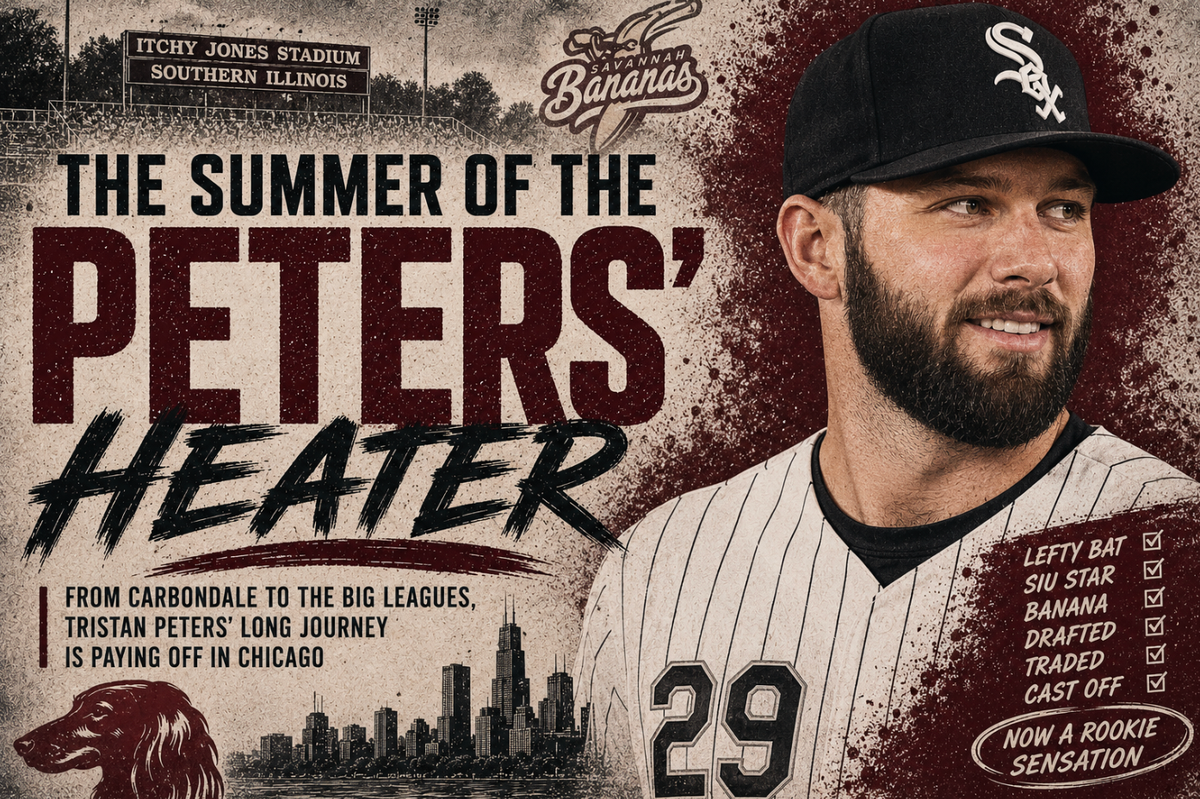
Tristan Peters is on a heater.
Not the kind your uncle claims he once had in a church softball league back in 1987. A real heater.
The kind where every line drive seems magnetically attracted to grass and where opposing pitchers walk back to the mound wondering whether they actually made a bad pitch or whether this guy simply refuses to cooperate with the laws of probability.
For the better part of two weeks, the former Saluki has turned major-league pitching into a personal inconvenience. He's hitting north of .500 over his last 11 games with the Chicago White Sox and has been a mainstay in the outfield after joining the club via trade in December.
As the hits (and confidence) keep coming, the White Sox keep finding reasons to pencil his name into the lineup in the midst of their surprising playoff run.
The only players hitting over .320 with 15+ XBH since May 1st:
— Just Baseball (@JustBB_Media) June 8, 2026
Shohei Ohtani
Tristan Peters 🤯
What an acquisition Peters has been for Chicago! pic.twitter.com/5HScUnwd3m
Chicago fans (including yours truly) have embraced him while national writers have started noticing him. Rookie of the Year conversations, once laughable, have become at least plausible.
Which is funny, because the story of Tristan Peters has never really been about being noticed.
For most of his baseball life, Peters has been hiding in plain sight.
Canada, Eh?
Before making his climb, he was hiding in Manitoba, where professional baseball careers aren't exactly a booming local industry.
He was hiding at Chandler-Gilbert Community College in Arizona, where he won a Gold Glove and met the woman who would become his wife.
He was hiding at Southern Illinois University as a sophomore in 2021, where he quietly put together one of the best all-around seasons by a Saluki in a generation.
He was hiding in Savannah, helping a little-known summer-collegiate team called the Bananas race to a 26-4 start before anyone knew what Banana Ball was.
And then he spent four years hiding in professional baseball, which might be the easiest place in the world for a talented player to disappear.
Professional baseball has always had a strange relationship with players like Peters. Organizations spend millions trying to predict what a player might become five years from now. Peters kept doing something less glamorous and considerably more effective.
He kept producing.
“Not a Surprise”
At Southern Illinois, his numbers bordered on absurd.
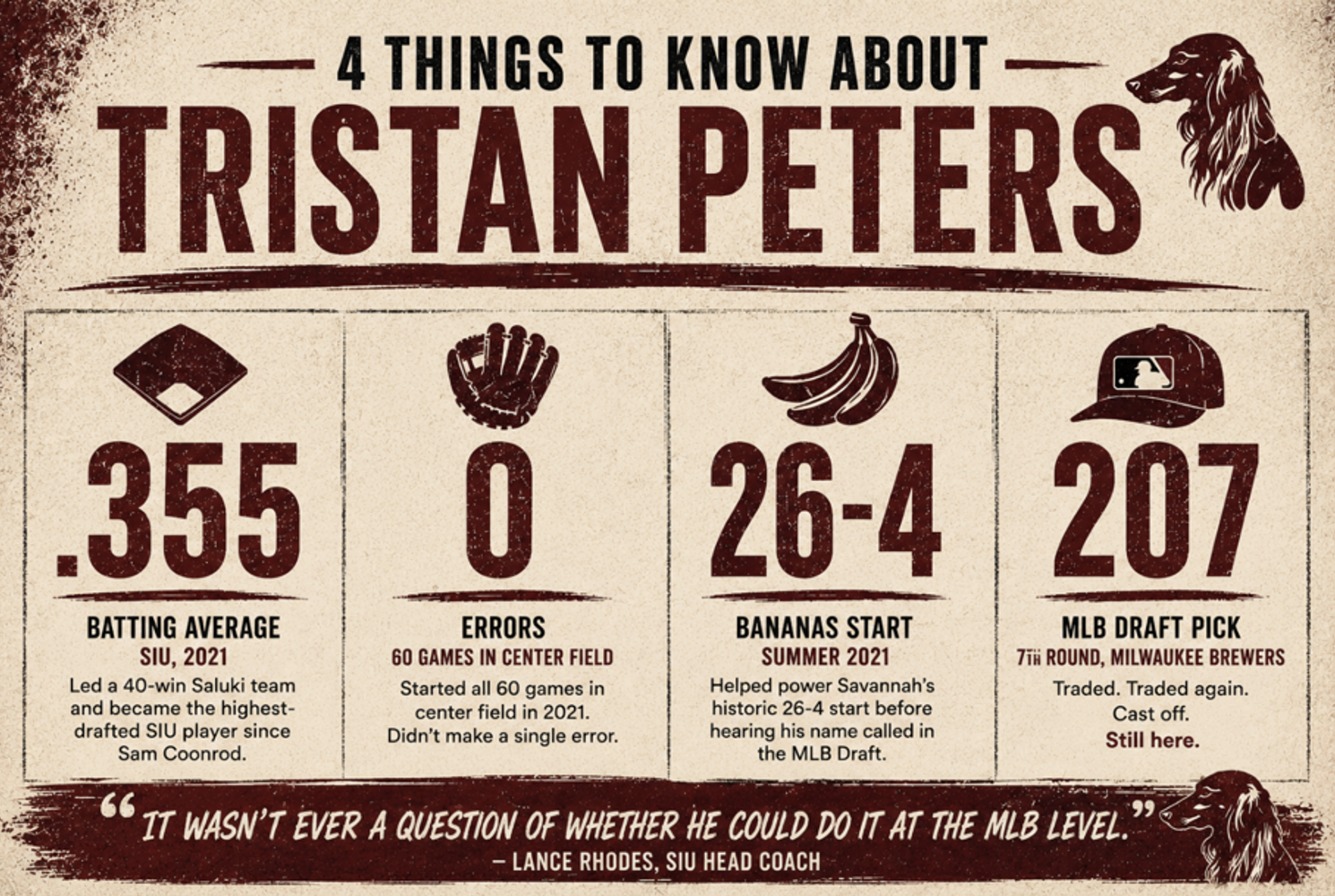
The batting average was .355. The 55 RBIs were impressive. The 53 runs scored mattered. But those numbers only tell part of the story. Peters led the Missouri Valley Conference in doubles, walks and on-base percentage. He finished near the top of the league in virtually every offensive category that mattered and a few that didn't. More revealing was the ratio that coaches and scouts always seem to notice first. Peters walked 46 times and struck out only 28.
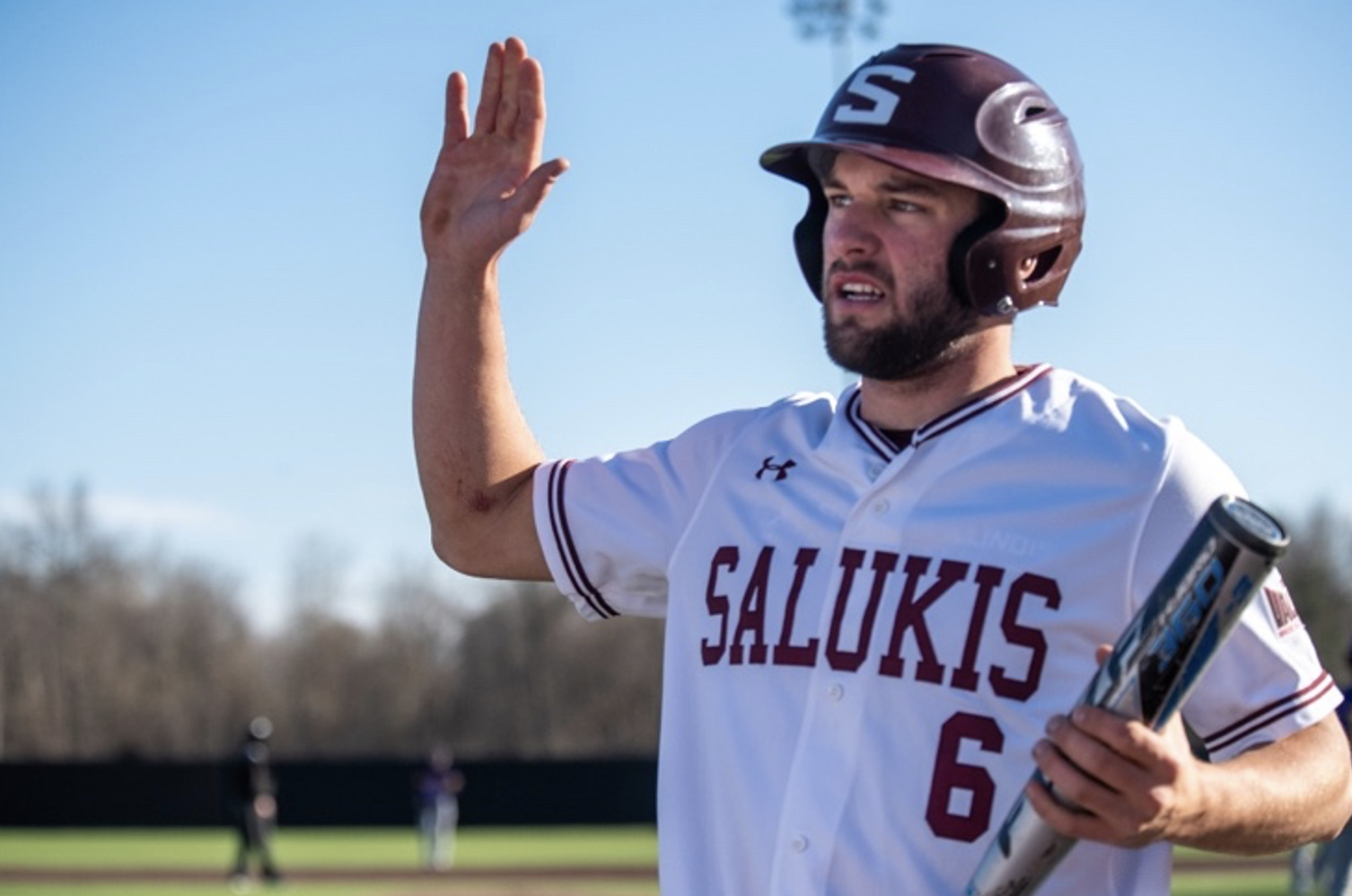
Read that again.
Forty-six walks. Twenty-eight strikeouts.
The modern game is filled with hitters who strike out 150 times and call it an acceptable tradeoff for power. Peters played an entirely different game. Every at-bat felt controlled and every plate appearance felt purposeful.
He wasn't trying to win the count with one swing. He was trying to win the entire confrontation.
Then there was the defense.
For 60 games that season, Peters patrolled center field for a Saluki team that won 40 games, the program's highest total since 1990. He didn't commit an error all year. Not one. Somewhere in the archives of college baseball, there are probably opposing hitters still wondering how a ball they thought was destined for the gap ended up settling into Peters' glove instead.
By the end of the season, the honors piled up. First Team All-Midwest Region. All-MVC. MVC All-Defensive Team. Highest-drafted Saluki since Sam Coonrod.
Yet even now, looking back, the most impressive thing was how normal he made excellence seem. Every weekend, every series, every game, Peters just kept showing up in the middle of everything good that happened.
SIU coach Lance Rhodes saw that consistency every day.
“Tristan’s success this season is not a surprise,” Rhodes told The UnderDawg. “I know from his time at SIU that his work ethic is as good as any college player that I have coached. You pair that with how hard he plays the game and you get great results.
“In my opinion, it wasn’t ever a question on whether or not he could do it at the MLB level, it was just a question of whether or not a MLB organization was going to give him an actual opportunity to show his ability. I couldn’t be more happy for him and I am excited that more and more people are going to see how special of a player he is.”
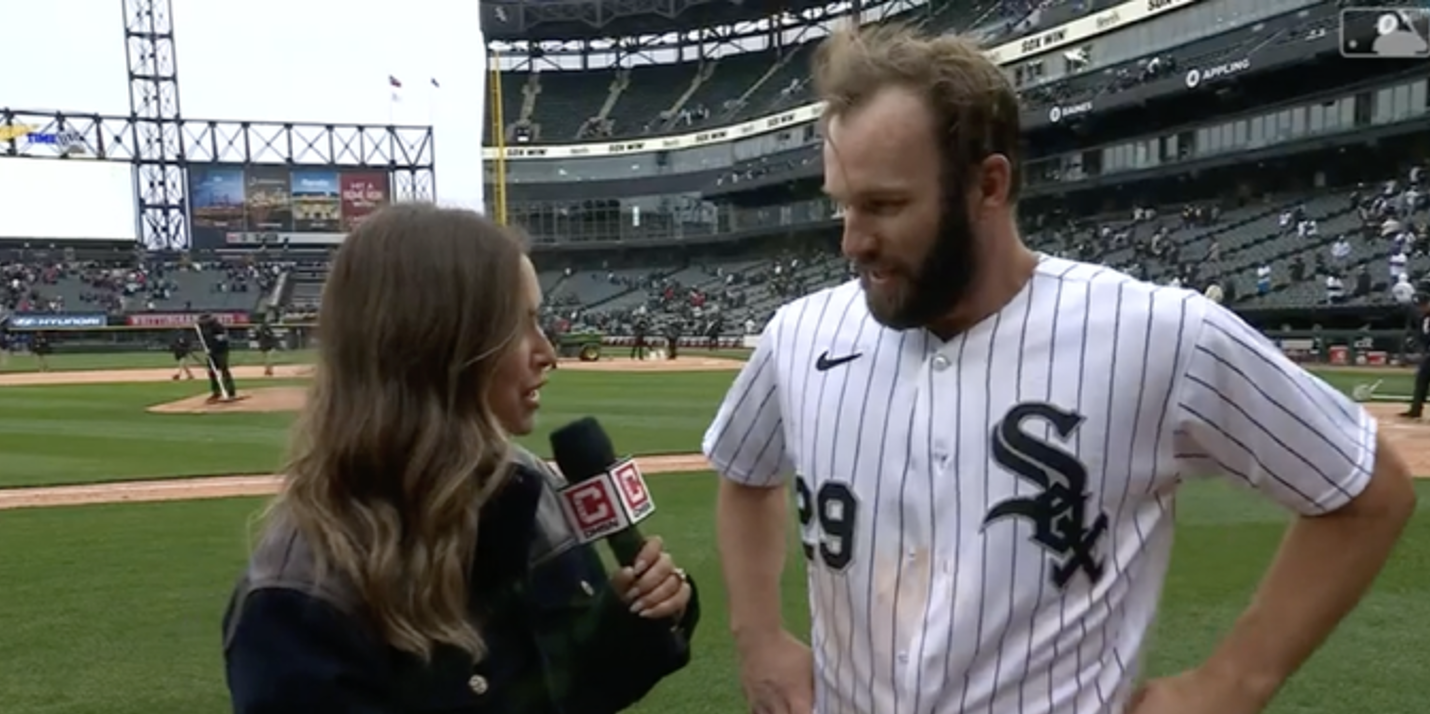
A Banana Before Banana Ball
Before reporting to professional baseball, Peters made one more memorable stop in the summer of 2021.
Savannah.
Back then, the Savannah Bananas weren't filling football stadiums or going viral on social media. They were simply a really good summer-collegiate baseball team with a really strange name.
Peters fit right in.
The Bananas opened the summer 26-4. Peters hit .320 and reached base nearly half the time. He drew 16 walks and struck out just six times in 17 games.
Pitchers couldn't get him out because he refused to help them.
A few weeks later Milwaukee selected him in the seventh round of the MLB Draft. The Brewers thought they were drafting a solid outfielder. What they actually drafted was a player who had spent most of his baseball life proving people wrong.
No Red Carpet
Professional baseball never rolled out a red carpet for Peters.
The Brewers drafted him in the seventh round. The Giants acquired him. Then the Rays. At each stop, Peters hit enough to keep moving but never quite enough to become a household prospect. He was the baseball equivalent of a really good book that everybody promised they'd get around to reading someday.
Eventually, Tampa Bay moved on. The White Sox acquired him for cash considerations, a phrase that somehow sounds even less glamorous than it is.
And yet there was something fitting about it. Tristan Peters has spent most of his baseball life being underestimated by people who later wish they hadn't underestimated him.
The White Sox probably didn’t think they were acquiring a future Rookie of the Year candidate. They were simply trying to figure out some depth for their depleted outfield.
Former Saluki teammate J.T. Weber isn't surprised by what has happened next.
“Not at all,” Weber told The UnderDawg. “Tristan was never the flashy guy who immediately wowed you with his swing or physical presence, but he was always one of the hardest workers on the team. He had incredible bat-to-ball skills and was one of the best hitters I’ve seen at consistently squaring up good pitches and hitting them hard.”
What stood out to Weber was Peters' ability to hit. And hit he did.
“As a left-handed hitter, he never seemed intimidated by left-handed pitching, which is pretty rare,” Weber said. “That fearless, aggressive approach comes through and why he is one of the top outfielders in the MLB comes from his work ethic, and I’m not surprised to see those qualities carrying over to the big leagues.
There is a temptation when a player like Peters catches fire to search for some magical explanation. Sometimes the explanation is much simpler than a complex swing change.
Sometimes a player is exactly who he's always been.
The White Sox are seeing the same hitter SIU saw in 2021.
The difference is that now he's doing it under brighter lights, which seemingly haven't changed much about the player.
Weber believes that's because Peters never allowed baseball to become his entire identity.
“I’d say discipline and humility,” Weber said when asked what allows Peters to overcome adversity. “Tristan always seemed to have a healthy balance of confidence and humility... confident enough to compete without fear, but humble enough not to think too highly of himself.”
Weber also points to Peters' faith as a stabilizing force.
“From my understanding, he’s also a follower of Jesus, and I think that gives him an identity beyond baseball,” Weber said. “Baseball is a game of failure, so you need confidence to keep showing up, but you also need humility to handle the ups and downs. Tristan has done a great job of staying disciplined, working hard and keeping a level head, and those traits go a long way both in baseball and in life.”
The Same Guy
Maybe that's why Peters’ story resonates.
Every baseball fan knows somebody like him. The kid who was always good but never flashy or the guy whose baseball card never seemed to match his value.
Those players rarely become stars overnight. But every now and then they catch fire. And when they do, everyone suddenly acts surprised.
More than the skills, the thing teammates seem to remember most is the personality.
For a guy from Manitoba, Peters somehow arrived in Carbondale carrying a healthy appreciation for cowboy culture.
“Tristan was always a fun, goofy guy to be around,” Weber recalled. “Being from Canada, he wasn’t exactly what I expected. He had played junior college ball in Arizona and was really into the cowboy scene — boots, square dancing, the whole deal. As a guy from Southern Illinois, I always found that pretty funny coming from someone from Canada.”
The John Wayne-like competitiveness showed up everywhere.
“Coach Rhodes would occasionally have to talk to both of us about being a little too aggressive in the outfield during batting practice because he didn’t want us getting hurt,” Weber recalled. “I loved playing alongside Tristan because of that. He wasn’t trying to be flashy; he just loved the game and played it the right way. That kind of attitude makes baseball a lot of fun and is what it’s all about.”
Which, when you think about it, might be the simplest explanation for everything that has happened since.
Save for the diehard Saluki fans who remember him roaming center field in Carbondale, drawing walks, stealing bases and running down fly balls, most of the baseball world is only now discovering Tristan Peters.
The heater won't last forever. Nobody hits .500 for very long.
But the White Sox (and Saluki fans) will enjoy it while it lasts.
Welcome to the Summer of the Peters' Heater.